Step 1: Be a Great Conversation Starter

Think about your heroes. What do they all have in common? They talk, they tell stories, they get your attention through words.

Communication is the basic element of all success.

Throughout history our most respected and memorable heroes are great orators, or great writers, or both. Whether they are founders, philosophers, politicians, scientists, leaders in religion, the art, or business, the most influential are also the best communicators.

From ancient Greeks to hip-hop artists, orators use the stage and written words to get their message out.

Who are your heroes?

Today, among your personal heroes may be a great conversationalist in your family, a speaker with a motivational podcast, or an inspiring author. They have a voice and they use it to connect.

That’s what great communication can do.

Becoming a strong communicator gives you the power to influence people. It allows you to make connections. As a nonprofit leader, at any level, communication will win advocates, donors and volunteers. It will make you and your organization stronger and more influential.

Communication is so fundamental it is often overlooked as a key part of success. Yet, when you look at what nonprofits need to succeed, nothing is possible without communication. To fundraise or influence policy makers, or to recruit volunteers, you have to speak and write. To successfully serve clients or build a membership base, you must communicate.

Communication drives success

Every relationship begins with communication. That communication may be equally what you see and what you hear. As you meet someone new, or simply speak in front of someone, they get feelings about you based on your eye contact, movement, and, of course, what you say and how you express it.

Your audience, of one or many, detects your mood, your emotions, and your interest.

Body language starts with your eyes and continues down the body. To gain attention, respect, and interest, you can practice your smile and posture. You are aiming to communicate curiosity and respect. Your audience reflects your mood. If you are bored, they will be too.

The sparks that start a relationship are well known in dating: “we locked eyes across a crowded room.” Sparks also fly in the office, at networking events, even in virtual meetings.

Words matter

A great smile is an icebreaker, but words matter. We have tens of thousands of words to choose from and millions of combinations. How do you find the right ones?

The Nonprofit Champion journey begins with Communication. You will discover how to find your words and your voice, and to use them to connect and grow. To be a winner.

This is a game plan to take you and your organization from where are you now, to where you want to be.

Remember, as you dig in and get started, that every conversation matters. The world is full of opportunity for you and your organization, don’t let any of that pass you by.

A note to nonprofit champions (you):

This post is an excerpt from my book, Leader @ the Center. I hope it inspires you to go out and start a conversation today. You never know!
Merle Benny writes and speaks to inspire Nonprofit Champions. She believes that every nonprofit is created with love and deserves to thrive. Her marketing communications expertise and years of study led her to write Leader @ the Center. Everyone has the potential to be a leader and a Nonprofit Champion.
Great Nonprofit Leaders Tell Stories, Here’s Your Secret Formula

Stories are magical. Everyone is hard-wired for stories, you enjoy them, you are influenced by them, and you react to them. When you become a great storyteller (and I’m about to give you the secret formula), you get more of what you want.

Nonprofits have many stories to share. In fact, you are making new stories everyday. Your treasure trove of stories should include your Founder’s Story, your own story, and the stories of those who benefit from the work of your nonprofit organization.

I heard a founder’s story when I was seven years old and it has impacted by whole life!

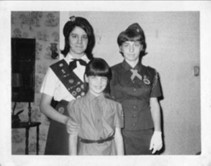
When I was in the 2nd grade I became a Brownie. We made crafts, sang songs, and sold cookies. I wasn’t very good at any of those things. But then I heard about Juliette Gordon Low.

Merle Benny

Merle & her sisters

I was fascinated! She was the founder of Girl Scouts. She lived a bit of a whacky life and she created an organization for girls to do things they had never done before. And, as a result of her passion, I was a Brownie, one of 1000s all over the country.

Without this founder’s story I wouldn’t have stayed in the Girl Scouts through high school, or worked for them, or been a leader.

That’s the power of a story.

When you want donations, volunteers, clients, or love, stories will help you get them.

Stories do their magic because they stir up emotions. The emotions can be happy, sad, funny, or any mix of feelings. Think about a sitcom. It’s a story. The bible and koran are full of stories. When you read or hear story, it clicks, your brain lights up, you are paying attention. Just what you want from your audience, virtually or in person!

Keep your stories simple. You want them to be sticky. If they are easy to remember, they are easy to repeat. That means other people start doing your work for you by repeating your story!

Finally…here is the magic formula for your stories

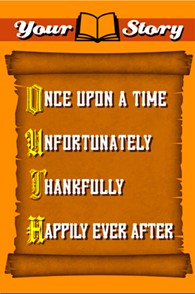
Yes, it’s really as simple as a fairytale. As you are thinking about the story you want to tell, try this easy, memorable formula. Just like Sleeping Beauty or Hansel and Gretel, your story opens by setting the scene.

But something goes wrong! You’ve added some suspense to the story and now you’ve got their attention. You may be describing the unfortunate circumstances of a child or family.

Next, the hero comes along – this could be you, your founder, your organization, or a donor. Through this vivid, descriptive story you have shown the listener how important your work is and got them interested in helping.

Ah, happily ever after.

Speaking of happily ever after, Juliette Low’s story was powerful enough to motivate me as a 7 year old. It still moves me now.

You can become a great storyteller. Just follow the simple formula and you’ll be ready to speak to a person or a group, in person or via social media. Make stories the focus of your marketing, community building, and fundraising.

Magic will happen.

***********************************************************************

Download this quick book and discover how important your voice is to your organization. The Secret to Nonprofit Success.

Merle Benny

Merle Benny, Nonprofit Champion

Nonprofit Communication: 7 everyday habits

Nonprofit organizations are built on connections. But where do these connections start? Often with a chance conversation.

Liz Larsen directs Project BEE, an anti-poverty organization that runs an emergency shelter. Plans for a new building were well underway in November when a Facebook exchange led to a big gift.

Like many of us working in the nonprofit sector, Liz is passionate about sustainable living. Her interest in gardening and being a better friend to the planet inspired her to make a comment on a like-minded Facebook group.

A friendly reply came from a woman new to the area. This led to more conversation and a plan to meet up and talk. Breaking out of Covid isolation, Liz looked forward to meeting her new eco-friendly connection at a local coffeeshop.

Everyday you have opportunities to talk to people including perfect strangers on the grocery line, neighbors, gym mates, and family members. Or, like Liz, online. But how do you make the most of those chance meetings?

Before we get started, hop on over and download my e-book, The Secret to Nonprofit Success. That’s where I reveal the key to the powerful communication that will make you successful.

When you become a great conversationalist you also become a magnet for people. You have the power to inspire them. They want to be around you, they care about what you care about, and they will be your best supporters and biggest donors.

Over the course of two hours at the coffeeshop, Liz also took the opportunity to share some stories about her work with the homeless and the plans for a new building.

As they got up to leave, her new friend asked Liz to wait a minute. To Liz’s great surprise, she handed her a check for the organization!

These 7 Steps to Happy Donors will work for you. You can use these today and everyday to build relationships with your current donors and to get more volunteers, advocates, and donors.

You want to make every conversation count. It’s a great skill to have and easy to master in 7 steps:

  1. Smile with your eyes. Wearing a mask has proven it – the eyes have a lot to say. Look directly at your new connection and smile. I’m not talking about a fake smile, you need a sincere “I love to listen to you” smile. One that shows you are fully engaged, interested, and darn glad to be with them. This even works via Zoom. A photographer taught me years ago to flirt with the camera. I was amazed at the difference it made!
  2. Share your passion. Your work has meaning and purpose. That’s sexy. When it’s your turn to talk, do it with enthusiasm. You can become really good at talking about the dream of your organization. It takes practice, so get started!
  3. Listen. Active listening is a learned skill. Really pay attention without thinking of your great comeback. This conversation is about building a relationship. Lean in, look interested, BE interested!
  4. Ask questions. Show your curiosity. Getting to know your new acquaintence will help you discover common ground and will lead to the opportunity for continued conversation. You aren’t asking for anything (that will be so easy when you get to it, but not yet), you are deepening the relationship.
  5. Tell your story. You are interesting. You have a story to tell that people want to hear. Dig deep in your soul and tell the story of your passion for your work. Collect stories that vividly show your work and your success, so you are always ready to share them.
  6. Offer connections. Offering 1 or 3 good connections is a powerful way to build the relationship (and the more connections you offer, the more you receive!). Think about who you know and how you can help your conversation partner. You are creating more common ground between you and helping them at the same time!
  7. Plan a next step. You don’t want to walk away without a plan for the future. Share contact information, extend an invitation, or schedule a visit or tour of your organization. This is just the beginning!

These conversation tips work on Zoom but they are oh so powerful when you meet in person. I hope you have a safe opportunity to do that this week!

As for Liz, her surprise donor has become an advocate for Project BEE. She recruits volunteers, shares the good news, and is always checking in to make sure their needs are being met.

Meeting strangers on the Internet isn’t always a bad thing!

Merle Benny

Merle Benny, Nonprofit  Champion.

Merle is the voice of Nonprofit Champions everywhere. She writes and speaks to inspire more nonprofit leaders in the community and world. She loves connections! Email merle@nonprofitchampion.com or follow Nonprofit Champion on Facebook or LinkedIn. 

A Letter to Brittany

Dear Brittany:

Congratulations on your new job. Today is the beginning of an opportunity and a challenge for you.

The good news is there has never been a better time to work for a nonprofit.

You are so creative! I bet that showed in your interviews. You have ideas and experiences that will help the organization grow and prosper. They were smart enough to realize they needed you. Now, you get to lead them to a brighter future.

I know you don’t feel like a leader yet, but you should embrace that role. In fact, nonprofits need leaders at every level in the organization. The world is moving way too fast to expect one leader to make all the decisions.

When you define leadership as “critical and collaborative thinking and action given what you see in front of you,”1 you begin to see howleadership is for everyone. That includes you!

I’ve seen you in action and I know what you are capable of, now is your chance to shine.

Your fresh ideas, willingness to work hard, and optimism for the future are needed right now. You are on a journey of discovery. I’ve mapped out a path for you (yes, it is a book written just for you and other rising stars), to inspire and prepare you to move your dream for your new organization forward and to take others with you. I call this new role Leader at the Center.

You already know how important nonprofits are, yet, now more than ever, they are called on to do more with less. They need you!

It’s been a tough time. The sector faces big challenges including limited resources, lack of leadership, and the need for vocal advocates to drive change and progress. Add to that the great adjustments required to operate during the pandemic and a heightened call for the sector to lead the way in diversity, equity, and inclusion.

It’s not a simple task Brittany. It’s not all on you, but you have an important role to play in your organization and in your community.

Remember! These threats are also opportunities.

I’ve written the book because I’ve seen the exciting things that happen when you use your voice. I’ve also seen missed opportunities. And every missed chance can result in a loss of funds, the inability to serve a child in need, or saying no to the needy or disabled.

In your new position you will have the opportunity to use your voice to connect with individuals, businesses, government, and philanthropists to fulfill a vision for a better future.

I love having the chance to share this with you. You’ll quickly discover that it is a simple game plan with three vital steps: Communicate, Connect, and Convene. I know these will come naturally to you. Start where you are right now, today, on your first day in your new job.

Each step of the game plan is offered as an opportunity for you to gain a fresh perspective, use your skills, and enjoy the challenge. These every day practices will inspire and renew you as you attract the resources your organization needs to create a better community.

More than ever the sector needs fresh thinking, renewed energy, and an optimistic outlook. It needs you, Brittany. You are a rising Nonprofit Champion.

Sending best wishes and a big hug.

* Forbes, Should You Really Build Leaders At Every level of Your Organization?, DougSundheim, November 17, 2020.

My grief & my purpose

I’m returning this week, finally able to put thoughts into words.

Two weeks ago, my brother-in-law Jim died suddenly. Life was challenging for him, yet he was full of love and laughter. It was around the same time my mother began receiving hospice care.

Last Wednesday I sat with my mom for the last time. As she lay there, I prayed and reflected.

Nancy Benny, 1982, Director of Volunteers

My mother, many years ago, planned her own funeral. From time to time she would revise the plans. One hymn that she wanted my daughter to sing, in celebration of her life, was the Prayer to St. Francis. As I sat with her, knowing she was dying, a line from that hymn ran through my head.

Grant that I may never seek so much to be consoled as to console

I pulled up the song on You-Tube and played it for her. As I listened, I thought about why it mattered so much to me at that moment.

The words, about giving rather than receiving, beautifully reflect how my mother lived her life.

It reminds me of why my mom was called to work with nonprofits and why I followed in her footsteps. A focus on serving, rather than being served, was passed down from my grandmother to my mother, and to me.

Who inspired you to do the good work you do? How did you find your purpose?

As I work through my grief, I feel deeply committed to continuing to fulfill my purpose: to honor, celebrate, and inspire great nonprofit leadership.

I hope you’ll listen to this lovely hymn, even if it is not in your faith practice, the message seems universal to me.

Make me a channel of your peace

Where there is hatred, let me bring your love.
Where there is injury, your pardon, Lord,
And where there’s doubt, true faith in you.

Make me a channel of your peace

Where there’s despair in life, let me bring hope.
Where there is darkness, only light,
And where there’s sadness, ever joy.

Oh, Master, grant that I may never seek
So much to be consoled as to console.
To be understood as to understand.
To be loved as to love with all my soul.

Make me a channel of your peace.
It is in pardoning that we are pardoned,
in giving of ourselves that we receive,
and in dying that we’re born to eternal life.

Are you boring or engaging?

When I gather with a group of nonprofit leaders and ask them to introduce themselves, I hear one person after another talk about the work they do. They use jargon, insider-speak, buzz words. They talk about the boss, a challenge they are facing, and find a variety of ways to describe their day-to-day work.

My reaction? Like everyone else, I’m confused and bored.

What would I like to hear?

I want to know your dream for a better world. I want to hear something I can understand and relate to. I want to hear your passion for the work, that’s contagious. Your introduction is the beginning of our relationship. Your words should make me curious; they should pique my interest.

Let’s explore how to do just that.

A Vision-focused approach

Keep in mind your goal: to get people to be curious and responsive. You’ll do that by starting with vision!

Vision is the big dream that inspires others. Your organization’s Vision is that big, bold dream of a better world. The simple statement gives you and everyone in your organization a clear view of the big picture. Examples like, Oxfam: A just world without poverty and Toronto Zoo A world where wildlife and wild spaces thrive, clearly communicate a dream.

A Vision statement for your organization has value:

  1. It is your guiding light, continually inspiring your work;
  2. It helps you and your organization set priorities and choose programs and services that are aligned with it;
  3. And, it acts as a safeguard and measurement, keeping everyone on track towards common goals.

Taking it a step further, your Vision Message, the personalization of your organization’s Vision:

  • Reflects your feelings and your personal motivation;
  • Is the start of a conversation, it works like a magnet to attract interest and curiosity;
  • Conversation leads to the connections you will need for ongoing, continued growth and development.

Your Vision Message is your own personal version of the Vision. It is how you express your purpose. It’s a short story about why you do what you do. It is emotional and engaging. It naturally appeals to listeners.

Your Vision Message is not a branding slogan. You do not have to look for clever wording or an advertising headline. You are looking for a few words to express the dream that makes your organization important to your community and to you personally.

Practice being engaging. Share your dream for a better world. I’d love to hear it!

The Lonely Model

The Executive Director (sometimes called Chief Executive Officer, like their for-profit counterparts) is isolated. As the sole leader of an organization, they are stuck between the board and the staff.

Yes, stuck. Who can they talk to? Share ideas with? Take risks with?

Exploring, and even failing, are essential parts of leadership. But in a model where everyone else is who the ED reports to (the board) or who reports to the ED (the staff), it’s hard to be an explorer.

The last thing a nonprofit organization needs is to stifle creativity.

Should we limit visionary leadership to one person?

In the book Forces for Good: Six Practices of Highly Effective Nonprofits, the authors make the case for shared leadership, “strong leadership doesn’t only exist at the very top of high-impact nonprofits; rather, it extends throughout the organization.” They go on to say that the successful organizations they studied use leadership to empower others.

The successful leader of fast-growth organizations should seek to inspire, rather than control. They should create space for creativity and innovation rather than protect their “turf.”

When everyone has opportunities to grow, share, lead, and connect, the the organization is stronger. Don’t count on one person. Open up the possibility for growth, diversity, and sustainability by giving everyone a voice.


Start small, dream big

It’s time again to think about how we gather. We’ve gotten so used to virtual meetings, we may have forgotten the joy of being in a room together.

But, no matter how you are doing it, great meetings are the place to turn dreams into reality!

Let’s explore the power of coming together with purpose and Vision.

Convening may be as familiar as a small group gathering to address an issue or make a plan. But it can be the start of something large and impactful.

Start every meeting with Vision.

Imagine your Vision – the dream your organization has for the future – as the underlying theme of every meeting or event you hold. Consider the possibilities:

  1. You regularly renew your commitment to the dream
  2. You start each meeting on common ground
  3. You have a shared point of reference, including the stories you’ve collected about your pursuit of your Vision
  4. You have a guiding principle that impacts all decisions
  5. You can reject what does not fit and might divert you from your course of action
  6. You are able to measure progress toward your Vision

Every time you convene you have the opportunity to move closer to your Vision and to bring others with you.

Your Vision is a dream, and you have the opportunity to reach for that dream by gathering the right people, who share your Vision, and together setting out a plan to reach toward that dream.

This is why we convene and why we set goals: to make dreams a reality. Convening is the action required to move forward and make something happen. Without it you are simply hoping for change.

Build a Better Board

Every organization needs a good board. Yet new organizations seem to have trouble figuring out why the need them and where to find them. Even established organizations struggle to have an active board.

I’ve seen all kinds of board members – rich, poor, arrogant, meek. Some work hard, really hard, to make the organization a success. Others show up, on occasion.

Let’s look at why you need board members, how to find them, and how to build a great board.

Why do you need board members?

Let’s quickly get the legal requirement over with. Yes, you have to have board members when you register your nonprofit, the number varies by state.

Now, the more important reasons you need a (great) board:

  1. Board members broaden your reach. Each member comes with their own network of friends, associates, and neighbors.
  2. Board members represent the community you serve. The more diverse your board, the more connections you have to people of all ages, backgrounds, ethnicities, religions etc.
  3. Board members bear gifts. Not every board member will make a large financial contribution (some will), others will be active volunteers, or provide expertise, or be great connectors.

Where and how will you find these great board members?

Start where you are:

  1. Speak and listen. Share the vision of your organization. Pay attention to who shares your values and goals for a better world. They make the best board members because they are already committed to your cause.
  2. Cast a wide net. Don’t limit yourself to the richest, whitest, or most successful. Influence and money matter but so do diverse voices, hard workers, and committed volunteers.
  3. Use available tools. Check your community volunteer bank, post on websites like Board Source. Look for those who fill a need (marketing, finance, legal) but keep your eyes open for others who may bring a new voice or perspective.

How do you build a great board?

  1. Provide a great introduction to the organization. Plan and deliver an upbeat, thorough, and compelling tour. Include stories! Your goal is to inspire first, educate second.
  2. Stay connected. The new board member is part of your expanding network. Make introductions, provide information and resources, keep in touch. Discover the best way to communicate with your board, as a whole, and with individual members.
  3. Remember, as a founder or Executive Director, you report to the board. While you will need to be actively engaged in getting a board up and running, it will take on a life of its own. And that’s as it should be.

Your organization will succeed with a good board. A good board is hard working, enthusiastic, skilled, diverse, and representative of your community.

You’ll want board members to fulfill a legal requirement, and, more importantly, to work with you to build a strong, sustainable organization. You will find them by sharing your story and seeking those who share your vision. Finally, you will build a great board by starting strong and continuing to stay connected, while respecting their role as board members.

Crisis Brings Opportunity

The past year has given us a new perspective – and new challenges. These changes remind us that with crisis comes opportunity. Big leaps forward have historically come from crisis. Twenty years ago there was a financial crisis and one result was the gig economy. Prior to that you wouldn’t have thought of paying to sleep in someone’s extra bedroom or using your own car as a taxi service.

Crisis challenges you to see things in a new light, sometimes because you are forced to, and the result is progress.

These changes impact all sectors of our economy, including nonprofits. Many businesses – nonprofit and for-profit – did not survive the COVID 19 crisis, increasing community needs and depriving residents of resources. Additionally, the nonprofit sector has been called on to the lead the movement for diversity, equity and inclusion.

This is a moment in time, you are called to act. That is all the more reason to be aware of the threats and opportunities and to prepare for a brighter future for all.

Here are some crisis/opportunity challenges that are impacting nonprofit leadership today:

Untethered workers.

Being in the right place is no longer a requirement. Technology has opened communication, giving us quick, easy, and cheap global interaction. Geographic restrictions and limitations have been completely rethought as a result of the quarantine for Covid19. Yes, working remotely is possible!

How this impacts your communication:  Nonprofits are challenged to find ways to stay connected internally and externally. When clients don’t have internet access, solutions have to be found so that communication continues. Previous geographic boundaries may not matter, giving you a broader reach for volunteers and donors.

We’ve got company.

New categories of businesses including B Corps, Public Benefit Corporations, and Social Enterprises are reshaping the way a purpose driven organization operates. At the same time, corporations are finding value in addressing social issues. Nonprofits might look to them as partners or models for restructuring organizations.

How this impacts your communication: It’s time to open up the conversation, seek partners, and look at what your organization can do differently or better. Could you run a for-profit business in support of your vision?

A generation of activists.

More than ever, organizations have well-educated work forces. New employees expect to contribute right from the start. Smart, motivated workers join nonprofits with the expectation of making a contribution to society. The forward-looking for-profit companies (above) may offer employees a better work experience.

How this impacts your communication: Include everyone in the conversation so that all employees are heard and have an opportunity to speak. Pay attention to what the new workers bring: tech skills, diversity, and a fresh voice. Find ways to empower everyone to be a force for change in the community.

Many voices.

Recent events have awakened us to the fact that there is work to be done to make our organizations truly diverse and inclusive. Nonprofits have the opportunity to lead the way in ensuring that everyone is treated with dignity. Internally, your organization benefits from hearing many perspectives and experiences.

How this impacts your communication: Organizations that empower many voices to speak and listen will be richer and more diverse. This allows you to reach and serve a broader community and multiplies the number of connections and opportunities open to you.

Let’s get together.

For years there has been talk about mergers and collaboration, but little action. The time has come to move forward together. This may be simply a means of survival. On a deeper level, if your organization is committed to a vision, then everyone else committed to that same vision is an ally (not competition). If you are focused on the vision, your organization will find liked minded partners.

How this impacts your communication: This is the time to identify which other organizations share your vision. Be the catalyst that starts the conversation about making a greater impact together.

These and other trends will impact how you work. Communication is the starting point for change, progress, and opportunity.