Use your words.

“Great leaders must have two things: a vision of the world that does not yet exist and the ability to communicate that vision clearly.” Simon Sinek

Communication is a basic element of your success.

Think about your heroes. What do they all have in common? They speak, they tell stories, they get your attention through words.

Throughout history our most respected and memorable heroes are great orators, or great writers, or both. Whether they are founders, philosophers, politicians, scientists, leaders in religion, the art, or business, the most influential are also the best communicators.

From ancient Greeks to hip-hop artists, great communicators get attention!

Today, among your personal heroes may be an elected official, a speaker with a motivational podcast, or an inspiring author. They have a voice and they use it to connect.

That’s what great communication does.

Why does this matter to you?

When you become a strong communicator you have the power to influence people. You make connections.

As a nonprofit leader at any level, your communications will win advocates, donors and volunteers. They will make you and your organization stronger and more influential.

✔️Use your words to build a bigger, better organization.

✔️Use your words to attract donors.

✔️Use your words to make the world a better place.

Communication is a key to success. Start with a clear vision for a quick connection. The rest is magic. 


Merle Benny, author of Sparkle!, writes and speaks to inspire Nonprofit Champions. The discovery that happy healthy nonprofits raise more money and grow faster (and, in turn, make the world better) is the result of a lifetime of service to nonprofit organizations. Merle has raised millions, been the voice of numerous organizations and continually brought innovation to the sector. Merle is a developer and presenter of the Nonprofit Consultants Institute.

You need money. You need time. You need people.

You need me.

For over 20 years I’ve worked with nonprofit founders, leaders, boards, and dreamers to build stronger organizations, create memorable brands, increase funding, and become Leaders @ the Center™.

Build a stronger nonprofit, one that is ready for the future. Sharpen your vision, hone the message. Retain and inspire employees. Build strong, collaborative networks including funders.
Great Nonprofit Leaders Tell Stories, Here’s Your Secret Formula

Stories are magical. Everyone is hard-wired for stories, you enjoy them, you are influenced by them, and you react to them. When you become a great storyteller (and I’m about to give you the secret formula), you get more of what you want.

Nonprofits have many stories to share. In fact, you are making new stories everyday. Your treasure trove of stories should include your Founder’s Story, your own story, and the stories of those who benefit from the work of your nonprofit organization.

I heard a founder’s story when I was seven years old and it has impacted by whole life!

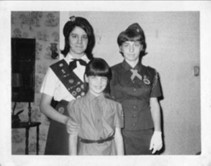
When I was in the 2nd grade I became a Brownie. We made crafts, sang songs, and sold cookies. I wasn’t very good at any of those things. But then I heard about Juliette Gordon Low.

Merle Benny

Merle & her sisters

I was fascinated! She was the founder of Girl Scouts. She lived a bit of a whacky life and she created an organization for girls to do things they had never done before. And, as a result of her passion, I was a Brownie, one of 1000s all over the country.

Without this founder’s story I wouldn’t have stayed in the Girl Scouts through high school, or worked for them, or been a leader.

That’s the power of a story.

When you want donations, volunteers, clients, or love, stories will help you get them.

Stories do their magic because they stir up emotions. The emotions can be happy, sad, funny, or any mix of feelings. Think about a sitcom. It’s a story. The bible and koran are full of stories. When you read or hear story, it clicks, your brain lights up, you are paying attention. Just what you want from your audience, virtually or in person!

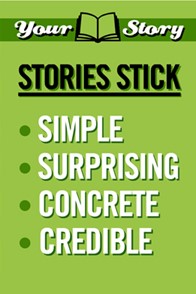
Keep your stories simple. You want them to be sticky. If they are easy to remember, they are easy to repeat. That means other people start doing your work for you by repeating your story!

Finally…here is the magic formula for your stories

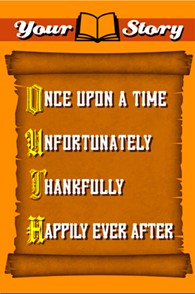
Yes, it’s really as simple as a fairytale. As you are thinking about the story you want to tell, try this easy, memorable formula. Just like Sleeping Beauty or Hansel and Gretel, your story opens by setting the scene.

But something goes wrong! You’ve added some suspense to the story and now you’ve got their attention. You may be describing the unfortunate circumstances of a child or family.

Next, the hero comes along – this could be you, your founder, your organization, or a donor. Through this vivid, descriptive story you have shown the listener how important your work is and got them interested in helping.

Ah, happily ever after.

Speaking of happily ever after, Juliette Low’s story was powerful enough to motivate me as a 7 year old. It still moves me now.

You can become a great storyteller. Just follow the simple formula and you’ll be ready to speak to a person or a group, in person or via social media. Make stories the focus of your marketing, community building, and fundraising.

Magic will happen.

***********************************************************************

Download this quick book and discover how important your voice is to your organization. The Secret to Nonprofit Success.

Merle Benny

Merle Benny, Nonprofit Champion

Nonprofit Communication: 7 everyday habits

Nonprofit organizations are built on connections. But where do these connections start? Often with a chance conversation.

Liz Larsen directs Project BEE, an anti-poverty organization that runs an emergency shelter. Plans for a new building were well underway in November when a Facebook exchange led to a big gift.

Like many of us working in the nonprofit sector, Liz is passionate about sustainable living. Her interest in gardening and being a better friend to the planet inspired her to make a comment on a like-minded Facebook group.

A friendly reply came from a woman new to the area. This led to more conversation and a plan to meet up and talk. Breaking out of Covid isolation, Liz looked forward to meeting her new eco-friendly connection at a local coffeeshop.

Everyday you have opportunities to talk to people including perfect strangers on the grocery line, neighbors, gym mates, and family members. Or, like Liz, online. But how do you make the most of those chance meetings?

Before we get started, hop on over and download my e-book, The Secret to Nonprofit Success. That’s where I reveal the key to the powerful communication that will make you successful.

When you become a great conversationalist you also become a magnet for people. You have the power to inspire them. They want to be around you, they care about what you care about, and they will be your best supporters and biggest donors.

Over the course of two hours at the coffeeshop, Liz also took the opportunity to share some stories about her work with the homeless and the plans for a new building.

As they got up to leave, her new friend asked Liz to wait a minute. To Liz’s great surprise, she handed her a check for the organization!

These 7 Steps to Happy Donors will work for you. You can use these today and everyday to build relationships with your current donors and to get more volunteers, advocates, and donors.

You want to make every conversation count. It’s a great skill to have and easy to master in 7 steps:

  1. Smile with your eyes. Wearing a mask has proven it – the eyes have a lot to say. Look directly at your new connection and smile. I’m not talking about a fake smile, you need a sincere “I love to listen to you” smile. One that shows you are fully engaged, interested, and darn glad to be with them. This even works via Zoom. A photographer taught me years ago to flirt with the camera. I was amazed at the difference it made!
  2. Share your passion. Your work has meaning and purpose. That’s sexy. When it’s your turn to talk, do it with enthusiasm. You can become really good at talking about the dream of your organization. It takes practice, so get started!
  3. Listen. Active listening is a learned skill. Really pay attention without thinking of your great comeback. This conversation is about building a relationship. Lean in, look interested, BE interested!
  4. Ask questions. Show your curiosity. Getting to know your new acquaintence will help you discover common ground and will lead to the opportunity for continued conversation. You aren’t asking for anything (that will be so easy when you get to it, but not yet), you are deepening the relationship.
  5. Tell your story. You are interesting. You have a story to tell that people want to hear. Dig deep in your soul and tell the story of your passion for your work. Collect stories that vividly show your work and your success, so you are always ready to share them.
  6. Offer connections. Offering 1 or 3 good connections is a powerful way to build the relationship (and the more connections you offer, the more you receive!). Think about who you know and how you can help your conversation partner. You are creating more common ground between you and helping them at the same time!
  7. Plan a next step. You don’t want to walk away without a plan for the future. Share contact information, extend an invitation, or schedule a visit or tour of your organization. This is just the beginning!

These conversation tips work on Zoom but they are oh so powerful when you meet in person. I hope you have a safe opportunity to do that this week!

As for Liz, her surprise donor has become an advocate for Project BEE. She recruits volunteers, shares the good news, and is always checking in to make sure their needs are being met.

Meeting strangers on the Internet isn’t always a bad thing!

Merle Benny

Merle Benny, Nonprofit  Champion.

Merle is the voice of Nonprofit Champions everywhere. She writes and speaks to inspire more nonprofit leaders in the community and world. She loves connections! Email merle@nonprofitchampion.com or follow Nonprofit Champion on Facebook or LinkedIn. 

Are you boring or engaging?

When I gather with a group of nonprofit leaders and ask them to introduce themselves, I hear one person after another talk about the work they do. They use jargon, insider-speak, buzz words. They talk about the boss, a challenge they are facing, and find a variety of ways to describe their day-to-day work.

My reaction? Like everyone else, I’m confused and bored.

What would I like to hear?

I want to know your dream for a better world. I want to hear something I can understand and relate to. I want to hear your passion for the work, that’s contagious. Your introduction is the beginning of our relationship. Your words should make me curious; they should pique my interest.

Let’s explore how to do just that.

A Vision-focused approach

Keep in mind your goal: to get people to be curious and responsive. You’ll do that by starting with vision!

Vision is the big dream that inspires others. Your organization’s Vision is that big, bold dream of a better world. The simple statement gives you and everyone in your organization a clear view of the big picture. Examples like, Oxfam: A just world without poverty and Toronto Zoo A world where wildlife and wild spaces thrive, clearly communicate a dream.

A Vision statement for your organization has value:

  1. It is your guiding light, continually inspiring your work;
  2. It helps you and your organization set priorities and choose programs and services that are aligned with it;
  3. And, it acts as a safeguard and measurement, keeping everyone on track towards common goals.

Taking it a step further, your Vision Message, the personalization of your organization’s Vision:

  • Reflects your feelings and your personal motivation;
  • Is the start of a conversation, it works like a magnet to attract interest and curiosity;
  • Conversation leads to the connections you will need for ongoing, continued growth and development.

Your Vision Message is your own personal version of the Vision. It is how you express your purpose. It’s a short story about why you do what you do. It is emotional and engaging. It naturally appeals to listeners.

Your Vision Message is not a branding slogan. You do not have to look for clever wording or an advertising headline. You are looking for a few words to express the dream that makes your organization important to your community and to you personally.

Practice being engaging. Share your dream for a better world. I’d love to hear it!

It’s not someone’s job, it’s everyone’s job.

Imagine how much more powerful your organization would be if you multiplied the number of people who felt prepared and empowered to talk about the organization’s vision! The more people spreading the word, the more donors, volunteers, and advocates you have. Simple math says it makes sense.

Why don’t organizations work this way now?

Change happens slowly. While you can see the innovative practices of start-ups and fast-growth businesses, nonprofits tend to be more traditional. The focus is not on the bottom line. You exist for the public good. That’s a responsibility and a promise. Innovation has not traditionally been part of the equation.

Now, more than ever, nonprofits are challenged to find and keep employees, to pay them fairly, to create succession plans for continuity, and to continually inspire and motivate everyone in your circle of influence, including employees, volunteers, boards, and service recipients. It’s a heavy lift.

Everyone in your organization has the heart and mind to be an ambassador. They have chosen to work and volunteer there because they care about the vision and mission. It’s time to empower yourself and others. In fact, it is becoming a necessity.

I’ll explore this topic in more detail next week. For now, think about how you, from wherever you are in the organization, can stand up, speak up, and lead the way forward.

Step UP! You are a Leader

Not in a leadership role yet? No problem. I want to share with you the secret I discovered that changed my life.

When you have the opportunity to raise your hand and get involved, do it. I was frustrated in work and volunteer roles. I wanted action. I wanted change. Then I discovered how to make things happen.

Every leadership position I’ve had was because I was willing to take on a new task, help others out, give an opinion, or try something new. I went beyond my job description to make things better. No one complained because work was getting done. And when it came time for a promotion, I had already created the next role for myself.

Leadership is all about stepping and doing the job.

Leader at the Center

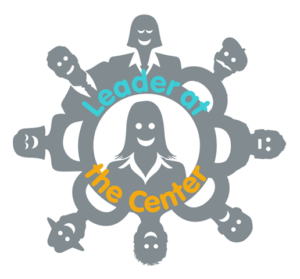
Nonprofit organizations need leaders. They need you. Becoming a leader from within the organization is rewarding. I call it Leader at the Center. It’s a role that needs to be filled now! Stepping up leads to opportunities, inside and outside your organization.

How do you become a Leader at the Center? Here are 3 steps:

1. Communicate – use your voice to share stories, including your own! Speaking about your dreams and the dream of your organization to create a better world will get you an audience, in person or on social media.

2. Connect – be the connector. Make sure you are meeting people and connecting them to resources, ideas, and other people. Your active connecting will come back to you with connections that will help you reach your dreams.

3. Convene – bring people together. See a problem? You can solve it by using your communication skills and connections to gather people and address the issue. Convening is the way you change dreams into goals.

You have exactly what it takes. Step up. Raise your hand. Start talking, make connections, and gather people together. You’re a Leader at the Center.

Merle Benny is a speaker, author, and trainer. She believes there are Nonprofit Champions at every level and role in an organization. Connect to Nonprofit Champion on LinkedIn, Twitter, Facebook, and Instagram.