Nonprofit Champion is more than the name of the business I run. It’s even more that the work I do every day, supporting nonprofits.
It’s the result of a lifelong dream.
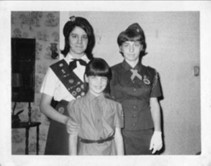
It started when I was a Brownie (that’s a young Girl Scout). I was in the second grade and my mother was the troop leader. I wasn’t very good at crafts, failed at selling cookies, and couldn’t carry a tune to save my life. I had skipped kindergarten, so I probably didn’t know a lot of important life lessons.
Then I heard about Juliette Low.
Learning how this woman (a bit eccentric but I didn’t know that yet) had started an organization just for girls was eye opening. It was not just my little troop, but there were other Brownies in other schools all over the country. Wow. That was impressive to my little beanie-wearing self.
Juliette became my idol. She taught me that girls matter. She taught me that you could create a movement and that movement was called a nonprofit.
I went on to learn a lot of things as a Girl Scout. Many of them impacted my life but nothing was more important to me than the simple lesson I learned from the Juliette Low story: If you have a vision you can create something much bigger than yourself.
I’d like to say that there was a straight path from that discovery until today. There was not. I did many things in my career, including a short (disappointing) stint working for the Girl Scouts. But as I used the leadership skills I learned in Girl Scouts and became successful in my marketing career, thoughts of her never went away. I knew I still wanted to inspire possibility like she did.
That dream landed me right where I needed to be. I began working with nonprofits, using my marketing communications expertise. I realized I did not want to be Juliette Low, I wanted to create Juliette Lows.
I’m sharing this story with you because it is the reason I champion nonprofit founders and leaders. It is also the reason I believe your possibilities are endless. Juliette Low started Girls Scouts 108 years ago. Imagine the millions of girls it has served! Imagine how much the lives of girls and women have changed in that time! Yet, it, like so many great organizations, has adapted and continues to fill a need. That’s what nonprofits do.
Juliette Low helped me discover my purpose. Today as I write and speak about adding Sparkle! to your nonprofit organization, I remember the story of Juliette and all the great founders I have had the honor of knowing and working with.
Dig deep for your purpose, tell your story. You can change the world. Act like Juliette, even if you are just starting your career.
Merle Benny, author of Sparkle!, writes and speaks to inspire Nonprofit Champions. The discovery that happy healthy nonprofits raise more money and grow faster (and, in turn, make the world better) is the result of a lifetime of service to nonprofit organizations. Merle has raised millions, been the voice of numerous organizations and continually brought innovation to the sector. Merle is a developer and presenter of the Nonprofit Consultants Institute.
When I gather with a group of nonprofit leaders and ask them to introduce themselves, I hear one person after another talk about the work they do. They use jargon, insider-speak, buzz words. They talk about the boss, a challenge they are facing, and find a variety of ways to describe their day-to-day work.
My reaction? Like everyone else, I’m confused and bored.
What would I like to hear?
I want to know your dream for a better world. I want to hear something I can understand and relate to. I want to hear your passion for the work, that’s contagious. Your introduction is the beginning of our relationship. Your words should make me curious; they should pique my interest.
Let’s explore how to do just that.
A Vision-focused approach
Keep in mind your goal: to get people to be curious and responsive. You’ll do that by starting with vision!
Vision is the big dream that inspires others. Your organization’s Vision is that big, bold dream of a better world. The simple statement gives you and everyone in your organization a clear view of the big picture. Examples like, Oxfam: A just world without poverty and Toronto Zoo A world where wildlife and wild spaces thrive, clearly communicate a dream.
A Vision statement for your organization has value:
It is your guiding light, continually inspiring your work;
It helps you and your organization set priorities and choose programs and services that are aligned with it;
And, it acts as a safeguard and measurement, keeping everyone on track towards common goals.
Taking it a step further, your Vision Message, the personalization of your organization’s Vision:
Reflects your feelings and your personal motivation;
Is the start of a conversation, it works like a magnet to attract interest and curiosity;
Conversation leads to the connections you will need for ongoing, continued growth and development.
Your Vision Message is your own personal version of the Vision. It is how you express your purpose. It’s a short story about why you do what you do. It is emotional and engaging. It naturally appeals to listeners.
Your Vision Message is not a branding slogan. You do not have to look for clever wording or an advertising headline. You are looking for a few words to express the dream that makes your organization important to your community and to you personally.
Practice being engaging. Share your dream for a better world. I’d love to hear it!
It’s time again to think about how we gather. We’ve gotten so used to virtual meetings, we may have forgotten the joy of being in a room together.
But, no matter how you are doing it, great meetings are the place to turn dreams into reality!
Let’s explore the power of coming together with purpose and Vision.
Convening may be as familiar as a small group gathering to address an issue or make a plan. But it can be the start of something large and impactful.
Start every meeting with Vision.
Imagine your Vision – the dream your organization has for the future – as the underlying theme of every meeting or event you hold. Consider the possibilities:
You regularly renew your commitment to the dream
You start each meeting on common ground
You have a shared point of reference, including the stories you’ve collected about your pursuit of your Vision
You have a guiding principle that impacts all decisions
You can reject what does not fit and might divert you from your course of action
You are able to measure progress toward your Vision
Every time you convene you have the opportunity to move closer to your Vision and to bring others with you.
Your Vision is a dream, and you have the opportunity to reach for that dream by gathering the right people, who share your Vision, and together setting out a plan to reach toward that dream.
This is why we convene and why we set goals: to make dreams a reality. Convening is the action required to move forward and make something happen. Without it you are simply hoping for change.
Big question, right? I challenge you to think about it. Finding your passion and talking about it is the best way to get what you want right now.
When President Franklin Roosevelt wanted to end child polio he helped create the nonprofit that became the March of Dimes. As the whole country rallied around this big goal, scientists went to work.
Your vision is your organization’s way of sharing a big dream for the future. It’s walking on the moon, ending discrimination, giving every child a home.
Possibility.
Discovering your vision means backing up a bit, zooming out, to get a wider view.
Let’s get personal. Put aside the written vision statement of your organization and explore your own reason for the work you do.
What is the problem you’d give your life to solve?
It’s a big question. Exploring it gives you a different perspective. It’s so easy to get caught up in the details and forget the big view.
The March of Dimes didn’t want to do research, they wanted to end childhood polio. They succeeded. Rather than end the fight, they went for a bigger dream. They expanded the Vision: March of Dimes leads the fight for the health of all moms and babies.
Think about your Vision, is it big enough? It is fat and audacious? Does it feel like a dream and inspire you to work harder?
YES! That’s what the world needs, right now.
How to Write Your Vision
Look at your own life journey and what brought you to where you are. Then explore why this work matters to you right now.
Dig deep, go beyond your mission (the work you do) to find the bigger dream for a world where your work is unnecessary.
Name the bigger dream. Visualize it. Find the words to express it.
Don’t edit yourself! This is an important first step but it is not your final draft, in fact it’s not for publication. This is about you finding the words to express your dream.
When you expand your Vision, and begin to dream what’s possible, you see opportunity where it didn’t exist before. When you find the words to express it – your purpose, passion, and dream – your message becomes contagious. You are expanding your reach and appealing to a broader audience. You are communicating to win.
What is the problem you’d give your life to solve?
Free Mini BookThe Secret is Out: A Wake-Up Call to Nonprofits
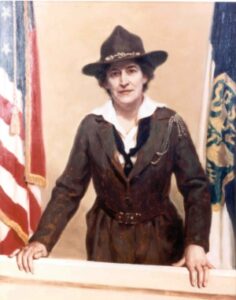 Juliette became my idol. She taught me that girls matter. She taught me that you could create a movement and that movement was called a nonprofit.